Showing posts with label Kangra. Show all posts

Census of India 2011 - Himachal Pradesh Population


State/District. Code
Name
Population
Growth Rate 2001-2011


Persons
Males
Females
1
2
3
4
5
6


02
Himachal Pradesh
68,56,509
34,73,892
33,82,617
+12.81


01
Chamba
5,18,844
2,60,848
2,57,996
+12.58
02
Kangra
15,07,223
7,48,559
7,58,664
+12.56
03
Lahul & Spiti
31,528
16,455
15,073
-5.10
04
Kullu
4,37,474
2,24,320
2,13,154
+14.65
05
Mandi
9,99,518
4,96,787
5,02,731
+10.89
06
Hamirpur
4,54,293
2,16,742
2,37,551
+10.08
07
Una
5,21,057
2,63,541
2,57,516
+16.24
08
Bilaspur
3,82,056
1,92,827
1,89,229
+12.08
09
Solan
5,76,670
3,06,162
2,70,508
+15.21
10
Sirmaur
5,30,164
2,76,801
2,53,363
+15.61
11
Shimla
8,13,384
4,24,486
3,88,898
+12.58
12
Kinnaur
84,298
46,364
37,934
+07.61

Folk Dances

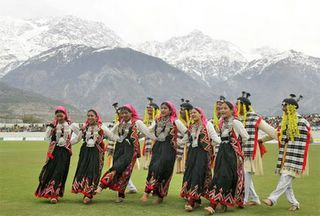
Celebrations-marriages, the harvest, festivals, local fairs, social events are all occations for a spontaneous expressions of joy-a time when the cheerful hill people take time off from their labours to sing, dance and enjoy themselves. The lilt of the ballad fills the air and skirts swing to the rhythm.

The Naati of Kullu is a favourite dance where dancer link hands and move in steps to varying rhythms. Earlier danced only by the men attired in full splendour of their traditional costumes-swirling tunics and churidars sashes and decorated caps-the naati was an affair that lasted several hours. Today the women participate too and shorter version of the 13 style of the dance are performed.

Another group dance that is popular in thje state is Karthi, a kullu harvest dance performed in the open, in the light of an autumn moon. The Burah, a martial dance from Sirmaur, is performed with the waving  of Dangras or axes to the accompaniment of the hurki. Balads recounting heroic battles and deeds are sung. The exhilarating Birsu   and Ghugti from the upper Shimla hills are performed by the Khunds as they go to the local fairs. A martial people-they hold a sword, a dangra, a khukri or a handkerchief as they dance.

The nomadic Gaddis have a fine musical tradition too. Romantic ballads narrating the story of Kunju and Chanchlo, the Romeo and Juliet of Chamba valley, are sung late into the night as the men and women dance.


Kinnaur is famous for its folk dances-Kayang, where men and women dance in semi circle around the musians and the bonyangchu, a care free dance performed by the men. The bakayang danced by the beautifull Kinnauri women, resplendent in layers of silver jewellery, presents a splendid spectacle.

Fescinating masked dance dramas are also performed in the Jubbal and Rohru valley of Shimla known as sih and bura, they narrate stories and romantic and satiriecal themes that have been handed doen orally from generation to generation.

Fairs & Festivals - January to December

Ages of rich tradition, warm and hospitable people, a landscape of breathtaking variety and beauty - all combine to pack each year in Himachal with a variety of fairs, festivals and celebrations. There are some 2000 deities worshipped in Himachal and numerous fairs and festivals are held in their honour. There are others that began as if just yesterday - and have added their colours to the grand collage. From religion to trade, from seasons to sports - and month by month - here is a joyous celebrations of life.


January
A cliche if you will - but often laced with snow - the year opens with a heady cocktail. Thousands of revellers head to celebrate the new year in Shimla, Chail, Manali and Dalhousie. Around the common calendar's new year comes Halda in Lahaul, which is a more private celebration of the event. Along the valleys of Chandra and Bhaga rivers, a few members of every household step out with lit cedar twigs to a west oriented place selected by the 'lamas'. These slender branches form the first flames of a bonfire which is then dispersed. Shiskar Apa, the goddess of wealth is worshipped, and the dancing continues for a couple of days.

There is greater sobriety, but no less joy, when Lohri or Maghi comes along in mid-January. This is the traditionary mid-winter day and also commemorates the last sowing of the Rabi crops. Community bonfires, folk songs and dancing, mark the festival. In tribal Spiti, Dechhang is celebrated at the height of winter, while the Lahaul area reserves it for early April. Paonta Sahib is a major focus on Guru Gobind Singh's birthday. The town and other gurudwaras close to it, are closely linked with the Guru's life.

On a mid-night towards the end of Paush (December-January), Phagli begins in Lahaul's Pattan valley with snow being packed in a conical basket - kilta.

This is upturned on a roof and resembles a Shivalinga. Shiva, Naga and the goddess, Hadimba are worshipped, and the younger generation also mark it by venerating the village elders. Chhang and lugari, locally brewed liquors flow freely, and ritual dishes are eaten. Kinnaur's Sazi (or Sazo), also comes at around this time.

More contemporary -events come in the form of the National Snow Statue Competition at Kufri, the Folk Dance Competition on Republic Day at Shimla. and the Water Sports Regatta at Kangra's Pong Dam. To make this wonderful time of year all the more attractive. 


February
Snow continues to play a major part in February's festivals and Himachal's Winter Carnival is also held this month.

Gochi in the Bhaga Valley is an unusual festival when the villagers celebrate the birth of male children. Token marriages of children below the age of six are also performed - and a lighter side comes with the snow balling every child participates in.

The Baba Barbhag Singh Mela is held in Una and honours this sage who was renowned for his magical powers. Basant Panchmi marks the arrival of spring in the lower areas, and every town seems to keep a reserve of colour for the occasion and the skies are filled with a medley of kites.

Ritual dances and an unbelievably rich imagery mark Lossor. This is celebrated in Buddhist areas throughout the state - while Lahaul's monasteries have some of the most spectacular performances. On its eve, the stylised chhaam dance and elaborate costumes and masks, commemorate the assassination of the cruel Tibetan king, Langdarma in the 9th century. Often - though wrongly - called 'the devil dance', it symbolises the triumph of good over evil.

March
Centered around the temple of Trilokinath, Char is celebrated in Lahaul. The town of Mandi with Its ancient temples revels in the Shivratri fair for a whole week. On elaborately decorated palanquins, hundred of local deities are carried to the town. Accompanied by folk bands, they make their first stop at the Madho Rai Temple and\then go to pay obeisance to Lord Shiva at the Bhootnath Temple. This is followed by festivities - music and song, dance and drama. Yet, all the while the atmosphere is surcharged with deep religious devotion.

In March's third week, the fascinating Nalwari fair is held at Bilaspur. Cattle is traded, there are wrestling bouts – and aero and water sports shows are recent additions.

Holi's riot of colours and celebration of spring, comes with laughter and vitality. There are exuberant celebrations at Palampur and Sujanpur. By the banks of the river Yamuna. the shrine of Paonta Sahib in Sirmour is thronged by Hindu and Sikh devotees on this day. Also in Sirmour, the Balasundari fair is held at Trilokpur near Nahan; this coincides with the sacred days of the Navratras. The temple of Baglamata, near Bankhandi in Kangra is also a major focus during these days.

Chait, the first month of lunar calendar is celebrated by the dancing of women in Kullu and by folk singing in Chamba.


At the shrine of Deothsidh (Seo) on the district border of Hamirpur and Bilaspur, a month long fair spans March and April.

April
Held on the first Baisakh -.the 13th April - Baisakhi is one of Himachal's most important festivals. Rooted in the rural agrarian tradition, it bids a flnal farewell to winter. At Tattapani near Shimla, at the Rewalsar and Prashar lakes near Mandi, people take purifying dips in the water. Numerous village fairs complete with wrestling, dancing and archery are also held on this day.

In April, Rali with its clay models is marked in Kangra. Legend has it that the beautiful Rali was married against her wishes and on the way to her husband's home, she leapt into a stream. The husband jumped in after her and trying to save both, Pali's brother also dived info the fast flowing waters. All three died. Today, clay models are made in every house to mark that day, while unmarried girls pray for grooms of their choice and the newly-wedded ask for happiness and prosperity, At Chamba, the Sui Mala is thronged by women and children and at the village of Taraur in district Mandi, the Mahu Nag fair Is held. The holy Markandaya fair Is held near Bllaspur and the Rohru Jatar is held in honour of the deity Shikhru. This is also the time when fishing and low altitude trekking raise their winter barriers, while the Spring Festival Is celebrated in Kullu from April 28 to 30.

May
May gushes In with a whole series of river rafting festivals and water sports Regattas, through-out the state. Focused around the goddess Hadimba Devi, Kullu celebrates the Dhoongri fair. In the same district, the Banjar fair and the Sarhi Jatar are held in May.

 Near Shimla at the exquisite glade of Sipur below Mashobra, the charming Sipi fair is held. It is trationally a time for match-making.

Throughout Himachal a variety of programmes are organised by the Department of Languages, Art and Culture. Dharamsala's summer festival and the programmes organised by the Tibetan Institute for Performing Arts, lift their curtains. The skies are blue and clear for the Hang Gliding Rally at Billing near Kangra, white Summer Skling glides smoothly in at the Rohtang Pass.

June
A wide spectrum of national talent, a variety of programmes and a splendid setting make Shimla's Summer Festival a memorable event. Shimla also hosts the Red Cross Fair, sport tournaments, flower shows, a photographs and posters exhibition and a fashion show based on folk costumes. The Kangra Festival is also held in June at Kangra, At Solan, on the third Sunday of the month, the Solan Fair honours the goddess Shilooni, the presiding deity of the region. On June's full moon night, the Ghantal festival is held at Lahaul's Guru Ghantal Monastery. And of course, given the time of the year and the possibilities it offers, there are various camping and trekking expeditions.

In the arid trans-Himalaya, at Kaza's Ladarcha fair, the old trade routes come alive as traders barter and sell a variety of goods and produce. At Keylong, the Lahaul Festival is also held this month.Elsewhere in the state, Haryali (Rhyali, Dakhrain) announce the advent of the monsoon rains.

July
Shravana Sankranti is celebrated at Nahan; at Arki, buffalo fights mark the Sair fair, and conducted in honour of Banar devta of Shari, the Rampur Jatar is held near Jubbal in district Shimla. July also heralds the travelling and trekking season to Kinnaur and Lahaul & Spiti.

August
Chamba's famous Minjar fair which celebrates the bounty of nature and prays for a good harvest is normally held in August. 'Minjars', maize shoots or silken strands, are cast on the waters of the river Ravi and the town immerses itself in a week of celebration.

Also in Chamba, the Manimahesh Yatra to the sacred tarn of Manimahesh is held immediately after the festival of Janamashtmi. At Bharmour, 28 km short of the lake, the nomadic Gaddis hold a fair for six days.  

Celebrated in Chamba, Kullu and elsewhere, Chrewal, Badronjo or Patroru is a festival of fire and flowers - and a time for purification of the fields.

In August, several places in Chamba, Bilaspur and Sirmour have the Gugga fair which is connected with the worship of Gugga, the Nag Devta. The same month witnesses the Dal fair in Upper Dharmsala. At Udaipur, in the Lahaul valley, the Trilokinath temple becomes a focus; this is sacred to Hindus and Buddhists alike. The Shravan fair is held at the shrine Naina Devi, while the Ashapuri fair is held in Kangra.

September
As the rains end. autumn sends fiery colours racing through the hills. In Kinnaur, the festival of flowers, 'Fullaich' (Phulech) opens a window to its remarkable people and their beautiful  countryside. Villagers scout the hillsides for flowers which are collected in the village square. These are then offered to the local deity. Then comes a spate of revelry - singing, dancing and feasting. Kalpa has some of the most vibrant celebrations and every twelve years, there is the special festival. Also in September, at the village of Chhatrari, near Chamba - and centered around the exquisite temple of Shakti Devi - a fair is held and masked dances performed.

The Kangra valley celebrates the festival of Sair. This is also celebrated with stalls, singing and buffalo fights at Arki dnd Mashobra. both near Shimla. At Nurpur in Kangra, under the watchful walls of its old fort, the Nagini fair bids the summer farewell. In the same district. on September 27, World Tourism Day is celebrated.  In Sirmour, there is a Regatta at the Renuka Lake, and Nahan hosts the Bawan Dawadashi fair.

October
There is a Regatta on the waters of the Gobindsagar, anglers vie for the largest catch in the Sangla valley and paragliders sail the skies at Billing. More traditionally, over two hundred deities converge on Kullu for its unusual Dussehra celebrations. They pay homage to Lord Raghunath while music and colour fill the 'Silver Valley'. Numerous stalls offer a variety of local wares. This is also the time when the International Folk Festival is celebrated. The Jwalamukhi Temple in Kangra becomes the venue for a major fair. At Killar and Panai (in Chamba's Pangi valley), the Phool Yatra witnesses a remarkable display of neighbourly affection and the Dehant Nag is worshipped.

November
With winter Just a hop and skip away, the age-old Lavi fair fills Rampur with a burst of activity. The town was once a major entrepot on the old trade routes to Kinnaur, Tibet, Ladakh and Afghanistan. Even today, the tradition is as vibrant as ever. By the churning waters of the river Sutlej, a variety of goods including wool, dry fruits and horses are bartered and sold.

The Kharif crops have been harvested when at the legendary Renuka lake, a fair graces its banks. There is trade, recreation and amusement. Idols of Lord Parshurama and Renuka are ceremoniously dipped in the sacred waters of the lake – and it is a time when a lot of matchmaking is done. Water Sports Competitions are held on the Pong Dam and Gobindsagar.

December 
As winter arrives, anglers shift to the Pong Dam .With the blessings of  Nobel Laureate, His Holiness the Dalai Lama, the International Himalayan Festival is held in Kangra district. Troupes from the Himalayan nations are present. The winter winds carry all the delights of ice-skating at Shimla. The extravaganza of the Ice-Skating Carnival is normally reserved for December. Christmas celebrations overtake Shimla and Dalhousie and as the church bells chime, they carry away another event-packed year, To visit the traditional fairs or to participate in the festivals, do confirm the dates as many vary from year to year.A range of accomodation is available at, or close to almost all the places.

List of Forts located in Himachal

Distt. Chamba

  1. Taragarh Fort, Taravas, near Nurpur, Tehsil Bhatiyat
  2. Ganeshgarh Fort, Near Shapur-16 Km., Tehsil Sihunta

Distt. Kangra

Nurpur Fort Nurpur

  1. Nurpur Fort, Nurpur
  2. Kotla Fort, Shahpur Kotla Tehsil Shahpur
  3. Haripur Fort, Haripur, Tehsil Dehra
  4. Vijaypur Fort, Tehsil JaiSinghpur, Palampur
  5. Pathiar Fort, Tehsil Kangra
  6. Mankot Fort, Tehsil Nurpur
  7. Siba Fort, Tehsil Jaswan-Kotla
  8. Jawali Fort, Tehsil Jawali
  9. Mastgarh Fort, Tehsil Nurpur
  10. Mangarh, Tehsil Dehra
  11. Ratngarh,
  12. Mao Fort (vanished) Near Kandwal Barrier, Tehsil Nurpur

Distt. Hamirpur

  1. Sujanpur Fort, Sujanpur
  2. Mahal Morian-Tal Fort, Tehsil Bhoranj

Distt. Mandi

  1. Kamlah Fort, Tehsil Dharamapur,
  2. Pangna Fort, Tehsil Pangna, Karsog
  3. Anantpur Fort

Distt. Kullu

  1. Chehni Kothi, Tehsil Banjar
  2. Manali Garh, Tehsil Manali
  3. Raghupurgarh, Near Jalori Pass, Tehsil Ani
  4. Nagar Castle, Naggar, Tehsil Kullu
  5. Mangarh, Banjar
  6. Talyara kothi, Tehsil Sainj, Banjar

Distt. Lahaul-Spiti

  1. Gondhla Fort, Tehsil Keylong
  2. Khangsar Fort, Tehsil Keylong

Distt. Kinnaur

  1. Labrang Fort, Tehsil Pooh
  2. Kamru Fort, Tehsil Sangla
  3. Murang Fort, Tehsil Pooh
  4. Sapani Fort, Tehsil Sangla

Distt. Shimla

  1. Mahasugarh, Tehsil Jubbal
  2. Samarkot, Tehsil Rohru
  3. Chaupal Fort, Chaupal town

Distt. Sirmaur

  1. Ghanduri Fortress, Tehsil Rajgarh
  2. Sirmauri Tal, Tehsil Paonta
  3. Jaitik Fort, Nahan
  4. Mangarh Fort, Tehsil Pachhad
  5. Haripur Fort, Haripur Dhar
  6. Chanderi Fortress, Chanderi, Chandpur, Tehsil Shilai

Distt. Solan

  1. Malaun Fort (Hindur), Tehsil Nalagarh
  2. Dharon ki Dhar Fort, Solan
  3. Banasar Fort, Tehsil Kasuali
  4. Nalagarh Fort (Hindur), Nalagarh
  5. Ramshahar Fort,Ramshahar town

Distt. Una

  1. Solasingi Fort, Tehsil Bangana

Distt. Bilaspur

  1. Bachhretu Fort, near Shahtalai, Tehsil Ghumarwin
  2. Baseh Fort, Jhanduta, Tehsil Ghumarwin
  3. Tiyun & Sriyun Forts near Ghumarwin
  4. Bahadurgarh, Tehsil Bilaspur
  5. Ratanpur, near Nauni, & opposite to Malaun Fort
  6. Kotkehloor Fort, Kotkehloor, Tehsil Naina Devi

Princely State of Kangra

PREDECESSORS AND SHORT HISTORY: kangra
Reportedly founded in mythical antiquity, with mention of Raja Bhumi Chandra in 4300BC. Rulers were :- 
  • Raja MEGH CHAND 1390/1405, fought against Timur, married and had issue.
    • Raja HARI CHAND I (qv)
    • Raja KARAN CHAND II (qv)
    • Raja PRATAP CHAND, founder of Bhimbar.
  • Raja HARI CHAND I 1405/1415, founded Guler in 1415 with his capital at Haripur, ancestor of the families of Siba and Datarpur.
  • Raja KARAN CHAND II 1415/1430, granted the title of Bada Raja.
  • Raja SANSAR CHAND I 1430/1450
  • Raja DEVANGGA CHAND 1450/1465
  • Raja NARENDRA CHAND 1465/1480, married (amongst other), a daughter of the Raja of Puna.
  • Raja SUVIRA CHAND 1480/1490 or 1480/1499, married and had issue.
    • Raja PRAYAG CHAND (qv)
  • Raja PRAYAG CHAND 1490/1510 or 1499/1520, married and had issue.
    • Raja RAM CHAND (qv)
  • Raja RAM CHAND 1510/1528 or 1520/1538, married and had issue. [He died sp 1538.]
    • Raja DHARAM CHAND (qv)
    • Mian Kalyan Chand, married .
      • Three generations
        • Raja CHANDARBHAN CHAND (qv)
  • Raja DHARAM CHAND 1528/1563, born 1468?, he was granted the title of Maharaja by the Mughal Emperor Akbar, married . He died 1563.
    • Raja MANIKA CHAND (qv)
  • Raja MANIKA CHAND 1563/1570, died 1570.
  • Raja JAI CHAND V 1570/1585, married . He died 1585.
    • Raja BIDHI CHAND (qv)
  • Raja BIDHI CHAND 1585/1607, fought against the Mughal Emperor Akbar. He died 1607.
  • Raja TRILOKA CHAND 1607/1612, rebelled against the Mughals, died 1612 [or January 1615]
  • Raja HARI CHAND II 1612/1627, born 1608 (1603), killed sp 1627 by Padshah Jahangir of Delhi
  • Raja CHANDARBHAN CHAND 1627/1658, married . He died 1658 in Delhi.
    • Raja VIJAY RAM CHAND (qv)
    • Raja UDAI RAM CHAND (qv)
    • Mian Narpat Chand of Bijaipur, married .
      • Mian Prag Chand, married .
      • Mian Agar Chand, married . He died 1732.
      • Mian Nigahi Chand, married . He died 1796.
      • Generations
      • Mian Molak Chand, born 1833, married and had issue. He died 1874.
      • Mian Mordhaj Chand, born 1853, married and had issue. He died 1887.
      • Mian Devi Chand, born 1881, married and had issue.
    • Kumari (name unknown), married Raja SURAJ SEN of Mandi.
  • Raja VIJAY RAM CHAND 1660/1687, received a mansab of 5000 foot, died 1687.
  • Raja UDAI RAM CHAND 1687/1690, married and had issue. He died 1690.
    • Raja BHIM CHAND (qv)
    • Mian Kirpal Chand, died 20th February 1696.
  • Raja BHIM CHAND 1690/1697, Dharam Rakshak, married . He died 1697.
    • Raja ALAM CHAND II (qv)
  • Raja ALAM CHAND II 1697/1700, founded Alampur, married and had issue. He died 1700.
    • Raja HAMIR CHAND (qv)
    • Raja GHAMIR CHAND (qv)
  • Raja HAMIR CHAND 1700/1747, built the fort of Hamirgarh and founded the town of Hamirpur, married . He died 1747.
    • Raja ABHAY CHAND (qv)
    • Mian (name unknown) Chand, married .
      • Raja GHAMAND CHAND (qv)
  • Raja ABHAY CHAND 1747/1750, built the fort of Riyal-Tira-Abhymanpur and the temple of Thakurdwara, married Rani Suratu Devi of Bhadrawah .
    • Kumari (name unknown), married Raja AMRIT PAL of Basohli.
  • Raja GHAMIR CHAND 1750/1751, married , 11 sons excluded from the succession. He died 1751.
  • Raja SHRINGAR CHAND 1751 (deposed)
  • Raja GHAMAND CHAND 1751/1774, rebuilt Pathiar Fort, appointed Nazim of the Jalandhar Doab by Ahmad Shah Durrani in 1758. He died 1774.
    • Raja TEGH CHAND (qv)
  • Raja TEGH CHAND 1774/1775, born about 1745; married and had issue. He died 1775.
    • Raja SANSAR CHAND II (qv)
    • Raja Fateh Chand, received the Jagir of Rajgir, married . He died 1828.
      • Mian Rudra Chand [Ludar Chand] of Rajgir, married and had issue. He died 1851.
        • Raja PRATAP CHAND, adopted by the Maharani of Pramodh Chand of Lambagraon.
        • Mian Kirat Chand, married .
          • Mian Jagroop Chand, born 1860, married .
            • Kanwarani Amar Dei, married Kanwar Pratap Singh of Chamba, .
            • Mian Moti Chand
        • Mian Udai Chand, married .
          • Mian Daljit Singh, born 1866, married .
            • Kanwar Pargas Chand, born 1890.
            • Kanwar Shyam Chand, born 1892.
      • Mian Rai Singh (natural son), married .
        • Rani Katochan, married (as his fourth wife), Maharaja NAUNIHAL SINGH of Lahore. She committed sati November in 1840.
      • Kumari (name unknown), married Raja HIRA SINGH of Jasrota.
      • Mian Man Chand. died sp.
      • Kumari (name unknown), married Raja DHARAM PRAKASH of Sirmur.
    • Raja SANSAR CHAND II 1775/1823, born 1765 in Bijapur, assumed the titles of Naresh and Chhatrapati, lost most of his possessions by the Treaty of Jawalamukhi in 1810, being allocated the small Jagir of Lambagraon for his maintenance, married 1stly Rani (?Prasanna Devi), daughter of Mian Kishan Singh of Suket, married 2ndly, a Rani from Sirmur, married 3rdly, a Rani from Bangahal, married 4thly, Gulab Dassi Gaddan, . He died December 1823.
      • Raja ANIRUDDH CHAND (by first wife), Jagirdar of Lambagraon, married and had issue. (see below)
      • Kumari (name unknown) (by first wife), married Raja SUDARSHAN SHAH of Tehri-Garhwal. 
      • Kumari (name unknown) (by first wife), married Raja SUDARSHAN SHAH of Tehri-Garhwal.
      • Raja Sir JODHBIR CHAND (by Gulab Dassi Gaddan), 1st Raja of Nadaun.
      • Rani Mahtab Devi [Rani Katochan] (by Gulab Dassi Gaddan), married 1829, Maharaja RANJIT SINGH of Lahore. She committed sati 28th June 1839.
      • Rani Raj Banso Devi (by Gulab Dassi Gaddan), married 1829, Maharaja RANJIT SINGH of Lahore. She committed suicide in 1835.
    PRESENT HEAD OF HOUSE:
    Raja Shri ADITYA DEV CHAND KATOCH, (488th Raja of his line,) Head of the Royal House of Kangra, Jagirdar of Lambagraon, Rajgir and Mahal Moria (1988) educated at Doon School, Dehra Dun; married 4th December 1968, Rani Shrimati Chandresh Kumari, daughter of HH Raj Rajeshwar Maharajadhiraj Maharaja Shri HANWANT SINGH Sahib Bahadur of Jodhpur, and his wife, HH Maharani Krishna Kumari Ba Sahiba.
    • Tikka Aishwariya Chand Katoch, married about 1997, Tikkarani Shailaja Kumari, daughter of HH Raja VIKRAM SINGH of Sailana, and his wife, HH Rani Chandra Kumari.
      • Natiraj Ambikeshwar Dev Chand Katoch, born 22nd December 1998.

    Religious Tourism in Himachal

    Himachal was known since the earliest of times as "Devabhoomi", the abode of the Gods. The splendid heights of the Himalyan ranges, with its great scenic beauty and aura of spiritual calm seem the natural home of the Gods. Two thousands or more temples all over the State, reiterate this fact.

    Being a State full of isolated valleys and high ranges, several different styles of temple architecture developed and there are temples with carved stone shikharas, pagoda style shrines, temples that look like Buddhist Gompas or Sikh Gurudwaras etc. Several of them are important places of pilgrimage and each year attract thousands of devotees from all over the country.

    HINDU PILGRIMAGE

    BAJRESHWARI TEMPLE: Just outside the town of Kangra is the temple dedicated to Bajreshwari Devi. Known once for its legendary wealth this temple was subject to successive depredations by invaders from the north. Destroyed completely in 1905 by an earthquake, it was rebuilt in 1920 and continues to be a busy place of pilgrimage.rele01

    BAIJNATH: The ancient temple at Baijnath is particularly beautiful. Built of stone in the 9th century AD, in the shikhara style, it is a fine blend of sculpture and architecture. Dedicated to Lord Shiva, Baijnath is close to Palampur and Kangra.

    JWALAMUKHI TEMPLE: Not too far from Kangra is this popular place of pilgrimage. An eternally burning flame that issues from a hollow rock in the sanctum, is considered the manifestation of the goddess Devi. During March-April and September-October every year, colorful fairs are held during the Navratra celebration. Jwalamukhi temple is 30 km. from Kangra.

    CHAMUNDA DEVI TEMPLE: Not far from Dharamsala (Kangra) is the famous temple to Chamunda Devi. It is an enchanting spot with glorious views of the mountains, the Baner Khud, Pathiar and Lahla forest.

    LAKSHMI NARAYAN TEMPLE: The Lakshminarayan group of temples in the town of Chamba are of great archaeological importance. Six stone temples dedicated to Shiva and Vishnu with tall shikaras, finely carved, date from the 8th century AD. The Lakshminarayan Temple is the oldest in this group. Other temples around Chamba town include, those dedicated to Hari Rai, Champavati, Bansigopal, Ram Chandra, Brijeshwari, Chamunda, Narsingh, and Yogi Charpat Nath.

    CHAURASI TEMPLES: The 9th century temples at Bharmaur are among the most important early Hindu temples in the Chamba Valley. According to legend, 84 (chaurasi) yogi's visited Bharmaur, capital of King Sahil Varma. They were so pleased with the king's humility and hospitality that they blessed him with ten sons and a daughter, Champavati. A cluster of shrines commemorates that visit. The temple square is the Centre of all activities in the little town of Bharmaur and the Lakshmi, Ganesh, Manimahesh and Narsing temples, the main shrines, are splendidly set off by the dramatic mountainscape.rele03

    CHATTARI TEMPLES: Not far from Bharmaur (Chamba) is the Chattari Temple with early examples of carved wood and an 8th century brass image of Shakti.

    MANIMAHESH (3,950 m): The Manimahesh Lake, high up in the mountains near Bharmaur, is an important place of pilgrimage. The solitary Manimahesh Kailash Peak- the legendary abode of Shiva, is reflected in its still waters. A little temple in the shikhara style with an exquisite brass image of Lakshmi Devi as Mahishasuramardini stands near-by. Every year, following Janmashtami, the annual Manimahesh Yatra is undertaken. The pilgrimage starts from Chamba from the Lakshaminarayan Temple and devotees wend their way up the arduous track from Bharmaur to take a sacred dip in the waters of the lake.

    MANDI: Mandi has a picturesque group of ancient stone temples with tall vimanas, splendidly located below the town on the banks of the foaming river. The Tarna Devi Temple (Mandi), a new shrine up on a hill, overlooks the town and valley.

    REWALSAR: Around a natural lake with a floating island are a Shiva temple-the Lomesh Rishi Temple, Guru Govind Singh's gurdwara and a Buddhist monastery founded by Guru Padmasambhava. A spot that is revered by people of three faiths (Mandi).

    PRASHAR TEMPLE: This temple, built in the 14th century, is a shrine where the rulers of Mandi once worshipped. The pagoda-style temple stands in the little green hollow around the Prashar lake, above the town of Pandoh. The views of the mountains are spectacular.

    SHIKARI DEVI (2850 m): It is possible to trek up to Shikari Devi from Janjheli and Karsog (Mandi). Through woods of assorted trees and shrubs - which include several medicinal herbs - two separate trek routes lead up to this ancient shrine located at the crown of the hill. Hunters in the area once prayed to the Goddess for success in their hunt - and here, perhaps, lies the origin of the name 'Shikari Devi'. The Goddess is worshipped in the form of a stone image. Interestingly, the temple which is said to have been in existence since the time of the Pandavas, has no roof - for local legend has it, that all attempts to build one have been unsuccessful.

    HANOGI MAA & KOYLA MAA TEMPLE: Hanogi Maa temple in on the way from Mandi to Kullu near Pandoh and Koyla Maa temple near Sunder Nagar in Mandi district.
    RAGHUNATHJI TEMPLE: Built in 1651 by the Raja of Kullu, the temple has an image of Raghunathji that was brought from Ayodhya. During the Kullu Dussehra, all the temples in the area send their deities to pay homage to Raghunathji at Kullu.

    BIJLI MAHADEV TEMPLE: An unusual temple dedicated to Shiva-the Lord of lightning, is located on a height overlooking the Kullu and Parvati valleys. A 60ft staff above the temple attracts divine blessing in the form of lightning and breaks the stone linga in the sanctum.

    DHOONGRI TEMPLE: This four tiered pagoda, embellished in finely carved wood, stands sheltered in grove of tall deodar at Manali (Kullu). It is dedicated to Hadimba Devi, wife of the Pandava, Bhim.

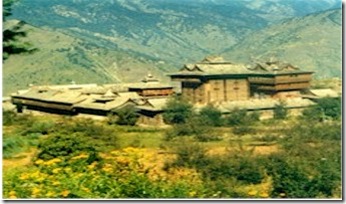
    BHIMAKALI TEMPLE:  A marvelous example of hill architecture, the temple complex at Sarahanis set against the incredibly beautiful backdrop of high ranges and forested slopes. Built in a mixture of the Hindu and Budhists styles, it was the temple of Bushair rulers of Rampur (Shimla). The palaces of the royal family are adjacent to the temple. From Sarahan there is a view of the Srikhand Peak, revered as the home of goddess Lakshami.rele02
    HATKOTI: Along the River Pabbar, 104 km from Shimla, is the temple dedicated to Durga and Shiva. The gods are said to have fought a pitched battled at this spot.

    JAKHU AND SANKAT MOCHAN: These two temples close to Shimla have a commanding views of the hills.

    NAINA DEVI TEMPLE: On a hill, close to Bilaspur and Kiratpur (34 km), is famous shrine of Naina Devi. A colourful fair, the Shravana Astami Mela is held in July-August.

    CHINTPURNI: A winding road goes up to the temple dedicated to Bhagwati Chinmastika or Chinpurni-the goddess who grants all wishes. A popular place of pilgrimage, Chintpurni is about 75 km from the town of Una and 100 km from Jalandhar.

    RENUKA: The  temple, dedicated to the immortal Renuka, stands near the picturesque Renuka Lake (Sirmour).

    TRILOKPUR: About 25 km from Nurpur (Kangra), at the confluence of the Bohar and Bhali streams, is another sacred spot popular with pilgrims of various faiths. There is a Hindu temple, a Buddhist monastery, a gurdwara and a mosque at Trilokpur.

    BABA BALAK NATH TEMPLE: A cave temple located in Deothsidth, in the Dhaulagiri Hills of Hamirpur, is a noted place of pilgrimage. People come here to seek the blessing of Baba Balak Nath whose image is located in the cave. Shahtalai, 46 km from the the district headquarters of Hamirpur and accessible by road, is about 10 km from Deothsidh.


    BUDDHIST PILGRIMAGES

    The remote valleys of Lahaul, Spiti and Kinnaur have strong Buddhist traditions. Splendid gompas, Buddhist monasteries, built along bare mountain-sides seem to be a part of the rugged terrain. These are the repositories of a wealth of Buddhist art and culture. The dim, cool interiors of ancient monasteries glow with the brilliance of painted murals, stuccos and elaborate thangkas framed with rich borders of silk.

    In Dharamsala, where the Dalai Lama has settled in exile, is a marvelous Tibetan township where an entire cultural tradition is being nurtured. It is a centre that attracts scholars, pilgrims and tourists.

    REWALSAR: Perhaps the most sacred spot for Buddhists in Himachal Pradesh, Rewalsar is 20 km south west of Mandi. According to legend, Guru Padmasambhava departed for Tibet from this beautiful spot, to spread the 'dharma'. A pagoda-style monastery stands along the edge of the lake.

    GURU GHANTAL MONASTERY(3020 m): This is on the right bank of Chandra river about 4 kms. above Tandi and is believed to be the oldest Gompa of Lahaul having wooden structure with pyramidal roofs, wood carving, preserving the idols of Padmasambhava & Brajeshwari Devi. On the full moon night in mid-June a festival called "GHANTAL" is celebrated by Lamas & Thakurs together.

    KARDANG MONASTERY(3500 m): It is about 5 kms. from Keylong across Bhaga river. It is believed to be built in 12thcentury. Monastery has a large library of Kangyur and Tangyur volumes of Budhist scriptures in Bhoti. Kardang village was once the capital of Lahaul.

    SHASHUR MONASTERY: Situated on a hill about 3 kms from Keylong (Lahaul & Spiti) towards north on the same slope. During June/ July this monastery attracts a large number of visitors when Lamas perform the devil dance. It was founded in the 17th century a.d. It belongs to red hat sec and is located among the blue pines. The paintings represent the history of 84 Buddhas.

    TAYUL GOMPA(3900 m): Tayul Gompa is 6 kms. from Keylong (Lahaul & Spiti) and is one of the oldest monasteries of the valley having a huge statue of Guru Padmasamhava about 5m high and houses library of Kangyur having 101 volumes. In Tibetan language Ta-Yul means the chosen place. There is an interesting story behind this.

    KYE MONASTERY: It is situated 12 kms. north of Kaza (Lahaul & Spiti) and serves the western population of Spiti. It is the oldest and biggest monastery of the valley and located at (4116 m) above Kye village. It houses beautiful scriptures and paintings of Buddha and other goddesses. Lamas practice dance, sing and play on pipes and horns. Relegious training to Lama's is imparted here. It has murals and books of high value.

    THANG YUG GOMPA: It is located 13 kms. above Kaza (Lahaul & Spiti) serving western part of central Spiti. Situated in a secluded place in the narrow gauge of Kaza Nallah, it generally has a Lama from Tibet. Above this there is a long plateau which leads to Shilla peak.

    KUNGRI GOMPA: It is situated in the Pin valley about 10 kms. from Attargo where Spiti river has to be crossed to enter Pin valley. It is serves the population of Pin valley.

    DHANKAR MONASTERY: It is situated about 25 kms. east of Kaza and serves eastern part of central Spiti. Dhankar is a big village and erstwhile capital of Spiti King. On top of a hill there is a fort which use to be a prison in olden times. The Monastery has about 100 Lamas and is in position of Buddhist scriptures in Bhoti language. Principal figure is a Statue of "Vairochana" (Dhayan Budha) consisting of 4 complete figures seated back to back. It has relics in the shape of paintings and sculptures.

    TABO MONASTERY: This is another large gompa serving the population of eastern side. It has its origin in the tenth century old and is located 50 kms. from Kaza (Lahaul & Spiti). In fame it is next to Tholing Gompa in Tibet. It has about 60 Lamas and houses a large collection of Scriptures, wall paintings etc. Murals of this gompa have similarity to that of the Ajanta paintings.

    NAKO: The legendary footprints of the Guru Padamsambhava are enshrined at the Lotsabaage Monastery at Nako. This high altitude village in Kinnaur is located near a limpid lake.

    TASHIGANG GOMPA: Can be visited by taking diversion from Khab to Namgya and then trekking to the Gompa.

    TILASANGH MONASTERY: 1 km. trek from Ka, it is 12 km. short of Yangthang.

    rele10

    SIKH PILGRIMAGES

    The Sikhs came to the Shivalik Hills, in Himachal Pradesh in 1695, at the invitation of the ruler of Sirmaur, to help him fight the Mughals. Guru Gobind Singh with his army, settled in Paonta Sahib in the foothills. During the reign of Maharaja Ranjit Singh, at the end of the 18th century, many of the western hill states also came under Sikh sovereignty.

    PAONTA SAHIB: This is the main centre of Sikh pilgrimage in Himachal. The gurdwara picturesquely located on the banks of the River Yamuna in district Sirmour, is venerated due to its association with Guru Gobind Singh, the 10th Sikh Guru. In March, an important fair is held and the holy Granth Sahib is taken out in procession.

    REWALSAR: The gurdwara at Rewalsar, near Mandi, is located on the periphery of a lake sacred to both the Hindus and Buddhists as well.

    MANIKARAN: The serene location and the seemingly mysterious hot springs made Manikaran (Kullu) a place of pilgrimage in earlier times. Guru Nanak, the first Guru of the Sikhs, visited this place to spend time in meditation. A gurdwara that was built to commemorate his visit, is now a place of pilgrimage for the Sikhs.

    rele08

    CHRISTIAN PILGRIMAGES

    Christianity made a late appearance in Himachal Pradesh, after the arrival of the British. The churches here are not more than 150 years old. Tall churches-the relics of the Raj, are to be found mainly in the small hill stations that the British created as summer retreats.

    KASAULI: Still unspoiled and very much as the British left it fifty years ago, Kasauli (Solan) has a fine old church. The Christ Church, is a typically Anglican structure of the period. Its foundation stone was laid in 1844. Well proportioned, its spires, buttresses and gothic arches are framed against the stately deodars.

    SHIMLA: The Christ Church, with its tall spire dominates the ridge in Shimla. This imposing structure is visible from as far away as Tara Devi, 8 km away. It was built in 1844, when Shimla was slowly coming into its own as the premier hill station of India., the Christ Church was designed to accommodate the entire Shimla congregation. Various memorials and stained glass windows fill the somber interior with colour and light.

    The first Catholic edifice of Shimla, St. Michael's Church, was built in 1850, at the western end of the Lower Bazaar. Later additions have made it an unusual piece of architecture. Inside the church are five marble altars, all brought from Italy in 1855 and fine stained glass windows.

    DHARAMSHALA: The stone church of St. John lies on a motorable road between Mcleodganj and Forsyteganj 8 Km from Lower Dharamshala (Kangra). It has a monument of Lord Elgin, one of the viceroys of India, who died in Dharamshala and was buried here.

    DALHOUSIE: Dalhosie (Chamba) is another hill station with a number of old churches. The church near the G.P.O. looks untouched by time. It has an angular roof of inter-leafed hexagonal slates. The Catholic church of St. Francis, built in 1894, is set against a backdrop of tall pines overlooking the Subash Chowk.

    rele09

    Twitter Delicious Facebook Digg Stumbleupon Favorites More